

Is Organic Energy Drink Healthier? A Label-Reading Guide
Last Updated: November 2, 2026
Quick Summary
An organic energy drink is not automatically healthier than a regular one, because organic certification is a farming standard, not a nutrition standard. The seal says nothing about caffeine dose, added sugar, or total stimulants, so judge any can on those numbers instead.
- Organic certification restricts synthetic pesticides and GMOs but does not cap caffeine or added sugar.
- Check milligrams of caffeine per serving, then multiply by servings per container for caffeine per can.
- Ingredients are listed by weight, so sugar or sweetener in the first three means the drink is sugar-forward.
- Guarana, yerba mate, green tea extract, and taurine stack onto the caffeine line and raise total stimulant load.
- Joggy is USDA Organic with 150mg of naturally occurring caffeine from guayusa, L-Theanine, and no added sugar.
Table of Contents
- Why the Organic Label Alone Doesn't Answer the Question
- Organic vs Regular Energy Drinks: Where the Real Differences Are
- Energy Drink Caffeine Content: How to Read the Number That Matters
- Natural Caffeine Sources: Guayusa, Guarana and Matcha Compared
- Sugar in Energy Drinks: Added Sugar, Sweeteners and What to Avoid
- A Step-by-Step Method for Reading Any Energy Drink Label
- Matching an Organic Energy Drink to Your Goal
- Pick Your Can and Check the Label Yourself
- Frequently Asked Questions
Why the Organic Label Alone Doesn't Answer the Question
Total global sports and energy drink sales hit $193 billion in 2023, according to Mayo Clinic Health System's overview of energy drink health effects. The organic segment is growing fast inside that number.
Short answer: an organic energy drink is not automatically healthier than a regular one. Organic certification is a farming standard, not a nutrition standard.
What Organic Certification Actually Covers
Organic certification is a set of rules about how ingredients are grown and processed, not a measure of whether the final drink is good for you.
Certification covers pesticide use, genetically modified ingredients, and ingredient sourcing. It says nothing about caffeine dose, sugar content, or how the drink affects your heart rate.
The Caffeine Gap Nobody Mentions
The organic seal doesn't change the caffeine question.
So the label question splits into two separate questions:
- Is the ingredient list clean?
- Is the caffeine load right for your body and your day?
Most guides answer only the first. The second matters more.
Organic vs Regular Energy Drinks: Where the Real Differences Are
The differences are narrower than the marketing suggests, and they split into two categories shoppers routinely blur: what organic certification regulates, and what determines whether a drink is healthy for you. Only one of those is answered by the seal.
What Organic Certification Regulates, and What It Doesn't
A certified organic seal means ingredients were grown and processed under defined agricultural rules. In the U.S., USDA Organic restricts synthetic pesticides and fertilizers, prohibits genetically engineered ingredients, and sets standards for animal raising and processed ingredients, farming and supply-chain standards.
What the seal does not regulate is the part that most affects your body:
- Caffeine dose. An organic can may contain 80mg or 300mg. Certification has no opinion on the number.
- Added sugar. Organic cane sugar, organic honey, and organic juice concentrate are all still added sugar. The certificate does not cap grams per serving.
- Stimulant blends. A drink can be organic and still stack caffeine with guarana, yerba mate, and extracts that add up to a high total stimulant load.
Where Organic and Regular Formulas Actually Diverge
When you put the two side by side, the real differences cluster in three places: ingredient sourcing, the type of caffeine used, and what is left out of the formula.
| Feature | Organic Energy Drink | Regular Energy Drink |
|---|---|---|
| Ingredient sourcing | Certified organic farming rules; restricted synthetic pesticides and GMOs | No sourcing standard |
| Caffeine source | Often plant-derived (guayusa, green tea, guarana) | Often synthetic caffeine, sometimes plant-derived |
| Added sugar | Frequently none, but check the grams | Often high; check the grams |
| Non-sugar sweeteners | May still contain them; organic status does not prohibit all | Common |
| Caffeine dose | Unregulated by certification | Unregulated by certification |
| Health guarantee | None | None |
Notice the last two rows. Neither column promises health or a safe caffeine dose. The organic column promises a cleaner supply chain, a real benefit for people who care about pesticide exposure and farming practices, but not the same as a health benefit from the drink itself.
What the Evidence Does and Doesn't Show
The evidence base for organic food is about farming practices and residue exposure, not whether organic energy drinks produce better health outcomes.
The evidence on energy drinks as a category is separate and more relevant to your body.
So the comparison that matters is not organic versus regular. It is:
- Caffeine per serving versus your personal limit.
- Added sugar per serving versus your daily target.
- Total stimulants in the can versus what else you drink in a day.
If you want the deeper side-by-side on caffeine sources, our breakdown of organic versus synthetic formulas covers which one fuels better and why.
Energy Drink Caffeine Content: How to Read the Number That Matters
Energy drink caffeine content is the single most important number on the can, and it's usually printed in the smallest type.
Look for milligrams per serving first, then find out how many servings are in the can. A 150mg dose in a single-serve can is very different from 150mg in a can you're meant to split.
Your Total Daily Caffeine From All Sources
Your coffee, your tea, your afternoon soda, and your pre-workout all count toward the same total. Most people add a new energy drink on top of an existing caffeine habit without subtracting anything.
That's how a "moderate" can becomes an excessive day.
If jitters are your concern, our guide to natural energy drinks without caffeine jitters walks through how to pick a can that won't leave your hands shaking.
Natural Caffeine Sources: Guayusa, Guarana and Matcha Compared
Caffeine from a plant and caffeine from a lab are the same molecule. The difference is what comes with them.
- Guayusa comes from an Amazonian holly plant and brings naturally occurring caffeine. It's the base of our formula.
- Guarana is a Brazilian seed with a high caffeine concentration, often used in powders.
- Matcha is ground green tea, delivering caffeine alongside L-theanine.
The source matters less than the dose.
For a closer look at how guayusa stacks up against your morning cup, see our comparison of guayusa versus coffee for focus, and for the evidence on whether it actually sharpens attention, read does guayusa really help you focus better.
Sugar in Energy Drinks: Added Sugar, Sweeteners and What to Avoid
Sugar is where organic labels earn their keep, and also where they can mislead. Organic cane sugar is still added sugar. Your body doesn't check the certificate.
Scan for these on the label:
- Added sugar, listed in grams per serving
- Sugar alcohols like erythritol, which can upset digestion in larger amounts
- Artificial sweeteners, which some people prefer to avoid entirely
The cleanest option is a can with no added sugar at all. If you want a wider list of swaps, our guide to healthy alternatives to sugary drinks covers what to sip instead.
A Step-by-Step Method for Reading Any Energy Drink Label
Reading an energy drink label takes about 60 seconds if you know the order to check things in, and what the numbers mean once you find them. Most guides stop at "check the caffeine." This one gives you the thresholds to compare against.
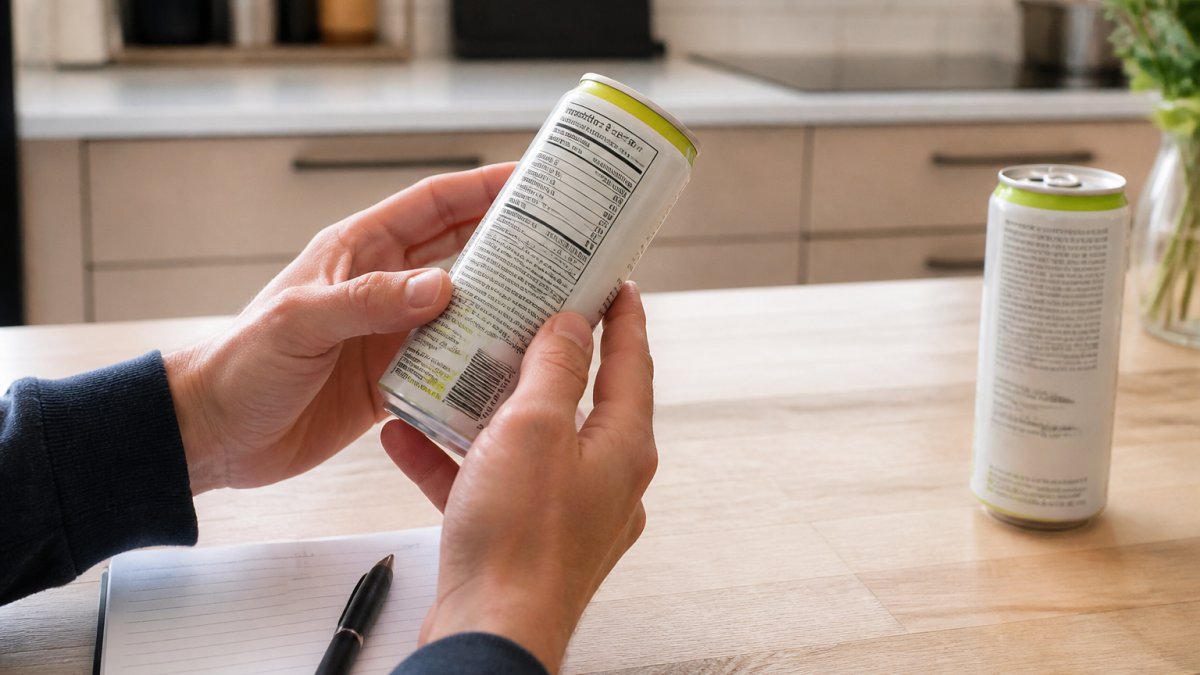
Step 1: Find the Caffeine Number, Per Serving and Per Can
Look for milligrams of caffeine per serving first, then find the servings per container. Multiply the two to get caffeine per can. A 150mg dose in a single-serve can is very different from 150mg in a can meant to be split.
As a rough frame for healthy adults, it is worth tracking your total caffeine from all sources against your own limit.
Step 2: Check the Sugar Line, Added Sugar, Not Total Carbohydrates
Find "added sugars" in grams per serving. A can with 27g of added sugar can use most of a day's budget in one drink.
The cleanest option is a can with no added sugar at all. If you want a wider list of swaps, our guide to healthy alternatives to sugary drinks covers what to sip instead.
Step 3: Read the Ingredient List Top to Bottom
Ingredients are listed by weight, so the first three matter most. If sugar, juice concentrate, or a sweetener appears in the first three, the drink is sugar-forward regardless of the front of the can.
Step 4: Identify the Caffeine Source and Any Stacked Stimulants
Natural extract or synthetic? The label usually says. More important is whether caffeine is stacked with other stimulants: guarana, yerba mate, green tea extract, and taurine are common additions. Each adds to the total load even when the caffeine line looks moderate.
Step 5: Add It to Your Daily Total
Your coffee, tea, afternoon soda, and pre-workout all count toward the same total. Most people add a new energy drink on top of an existing caffeine habit without subtracting anything.
A simple worksheet:
| Source | Typical caffeine |
|---|---|
| 8 oz brewed coffee | ~95mg |
| 8 oz black tea | ~47mg |
| 12 oz cola | ~30-40mg |
| Energy drink (check can) | 80-300mg |
| Pre-workout scoop (check label) | varies widely |
Add your day's sources before you open a new can. If the total is climbing toward the moderate ceiling, swap one source out rather than stacking another on top.
Who Should Be More Careful
Caffeine guidance is not one-size-fits-all. Pregnant and breastfeeding people should keep caffeine low, and children and adolescents should be cautious about energy drinks. People with heart conditions, anxiety disorders, sleep problems, or those taking certain medications should talk to a clinician before adding caffeine. If you are caffeine-sensitive, start low, check for L-Theanine, and avoid stacking with coffee.
Run this checklist before you buy a new brand. It takes less time than reading the front of the can, and it tells you far more.
Matching an Organic Energy Drink to Your Goal
The right can depends on what you're actually trying to do. Use this decision framework:
- If you want steady focus for work: prioritize L-Theanine alongside caffeine, and keep the dose moderate.
- If you want pre-workout energy: look for a clean caffeine source and zero added sugar.
- If you're caffeine-sensitive: start low, check for L-Theanine, and avoid stacking with coffee.
Demand for natural energy drinks is growing, but label-reading discipline separates a good pick from a bad one.
Joggy is a USDA Organic energy drink with 150mg of naturally occurring caffeine from guayusa, plus L-Theanine and no added sugar, designed for clean, focused energy without the jitters.
Pick Your Can and Check the Label Yourself
The organic label is a starting point, not a verdict. Caffeine dose, sugar content, and your own daily total decide whether a can works for you.
That's the standard we hold ourselves to. Try the Cherry Lime, or grab a Variety Pack to find your flavor.


Get started with Joggy and read your first label with confidence.
Frequently Asked Questions
Are organic energy drinks healthier than regular energy drinks?
Not automatically. Organic certification covers how ingredients are grown and processed, not caffeine dose or sugar level. Sugar-free or natural energy drinks can still carry high caffeine doses. Moderate consumption is generally not a concern for healthy adults, while excessive intake, especially mixed with alcohol, can be. Judge any organic energy drink by its caffeine per serving, added sugar and total formula, not the seal alone.
Are organic energy drinks lower in caffeine?
There is no rule linking organic certification to a lower caffeine dose. An organic can may hold as much caffeine as a conventional one, because the number depends on the plant source and the serving size, not the farming method. Check the milligrams per can and per serving on the label, then compare that figure against your total daily intake from coffee, tea and other drinks before you decide it fits your routine.
Can natural caffeine sources still cause jitters or affect sleep?
Yes. Caffeine is caffeine whether it comes from guayusa, guarana or a lab, and it can raise heart rate, lift blood pressure and disrupt sleep when the dose is high or taken late. Natural caffeine sources often bring other compounds alongside the caffeine, which some people find smoother, but the milligram count still governs the effect. Watch your timing: a can in the late afternoon can still be active at bedtime.
What should I look for in a healthier energy drink?
Start with caffeine content per serving and work out your total daily intake from every source. Then check added sugar and which sweeteners are used, since sugar-free does not mean caffeine-free. Look at the ingredient label for named plant sources such as guayusa, guarana or matcha rather than a vague blend, and confirm organic certification if that matters to you. Finally, match the drink to your goal, whether that is exercise performance, sustained focus or a coffee replacement.
Most energy drinks ask you to trust the front of the can. We'd rather you read the back. Joggy is USDA Organic, woman-owned, and built on guayusa caffeine plus L-Theanine for focus that holds steady. Shop now and taste the difference a clean formula makes.
