

Natural Energy Drink Reviews 2026: Joggy & Clean Picks
Table of Contents
- How We Reviewed Natural Energy Drinks in 2026
- Natural Energy Drink Ingredients That Actually Matter
- Energy Drink Caffeine Comparison: Milligrams per Serving
- Joggy Review: The Guayusa Energy Drink Scored
- Best-Tasting Healthy Energy Drinks: Flavor and Aftertaste
- Jitters, Crash and Daily-Use Tradeoffs
- Frequently Asked Questions
Last Updated: October 19, 2026
How We Reviewed Natural Energy Drinks in 2026
The global energy drinks market hit $85.3 billion in 2025, and it is projected to grow from $92.0 billion in 2026 to $158.5 billion by 2033, according to Grand View Research's energy drinks market report. That growth explains why so many cans now carry the word "natural." It also explains why so few of those claims survive a close read. This guide from Joggy covers natural energy drink reviews in 2026 the way we would want them reviewed: source first, dose second, marketing last.
A natural energy drink is a canned beverage that delivers caffeine from a plant source, such as guayusa, green tea or yerba mate, rather than synthetic caffeine, and limits or removes added sugar. That definition is the filter we used.
Our scoring rests on four weighted criteria:
| Criterion | Weight | What We Check |
|---|---|---|
| Caffeine source and dose | 30% | Plant-derived caffeine, milligrams per can, serving size |
| Ingredient quality | 25% | Organic certification, added sugar, sweetener type, label transparency |
| Taste and aftertaste | 25% | Flavor accuracy, bitterness, artificial notes |
| Value and daily use | 20% | Cost per serving, crash and jitter reports, repeatability |
We grade evidence too. A brand that publishes its caffeine source and milligram count earns credit. A brand that says "natural energy" and stops there does not.
Natural Energy Drink Ingredients That Actually Matter
Three ingredients decide whether a can treats you well: the caffeine source, the sweetener, and what the label admits.
A 2021 U.S. product-composition check found that 64% of energy drinks contained B vitamins, per Gitnux's energy drink industry statistics. Vitamins are common. Transparency is not. The label is where a natural energy drink earns or loses trust. Scrutinizing these ingredient lists reveals that many consumers are shifting toward natural energy alternatives to maintain focus during extended sessions without relying on synthetic additives.
Caffeine Source: Guayusa vs. Synthetic
Guayusa is a holly plant native to the Amazon, and its leaves carry caffeine alongside theanine, an amino acid linked to calmer focus. Synthetic caffeine is manufactured in a lab and added as a single isolated compound. Both wake you up. They do not feel identical.
Joggy builds its formula around AmaTea Max, an organic guayusa extract, at 150mg of naturally occurring caffeine per serving. That is a moderate dose, roughly a strong cup of coffee, and it is stated plainly on the can.
Sweeteners, Sugar and Label Transparency
No added sugar beats reduced sugar, and reduced sugar beats a vague "lightly sweetened" promise. Look for organic juice as the flavor base and a short ingredient list you can read aloud. If a can hides behind a "proprietary blend," assume the dose is unknown until proven otherwise.
Energy Drink Caffeine Comparison: Milligrams per Serving
Caffeine content is the single most useful number on any can, and it is the number most brands bury.
A standard 250ml (about 8.4 fl oz) energy drink often lands between 75mg and 160mg, while high-caffeine cans can push past 200mg. A 500ml can with 160mg is a meaningfully different drink from a 250ml can with the same load: same total, half the concentration per sip.
| Basis | What It Tells You | Example Math |
|---|---|---|
| mg per can | Total dose in one sitting | 150mg in a 12 fl oz can |
| mg per fl oz | Concentration; how fast you absorb it | 150mg ÷ 12 fl oz = 12.5mg/fl oz |
| mg per 100ml | Cross-brand comparison standard | 150mg ÷ 355ml × 100 = ~42mg/100ml |
| mg per kg body weight | Personal sensitivity context | 150mg ÷ 70kg ≈ 2.1mg/kg |
Here is how Joggy's line stacks up against itself, since dose consistency is the point:
| Product | Caffeine per Serving | Added Sugar | Sweetener Base |
|---|---|---|---|
| Cherry Lime | 150mg (guayusa) | None | Organic juice |
| Pineapple Crush | 150mg (guayusa) | None | Organic juice |
| Variety Pack | 150mg (guayusa) | None | Organic juice |
At 150mg in a standard can, Joggy sits in the moderate band, roughly a strong cup of coffee. That is deliberate: it is enough to register without landing in the high-caffeine tier that tends to produce jitters in casual drinkers.

For context on sensitivity: most healthy adults tolerate up to 400mg of caffeine daily, but individual response varies widely with body weight, tolerance, medication, and genetics. A useful rule of thumb is to start with one can, note how you feel at the two-hour mark, and adjust from there.
Joggy Review: The Guayusa Energy Drink Scored
Joggy is an organic energy drink built on guayusa caffeine and L-Theanine, and it scores highest on this list for one reason: the label tells you everything. Created by Ty Haney, the woman-owned brand sets out to deliver clean, focused energy without jitters or a crash.
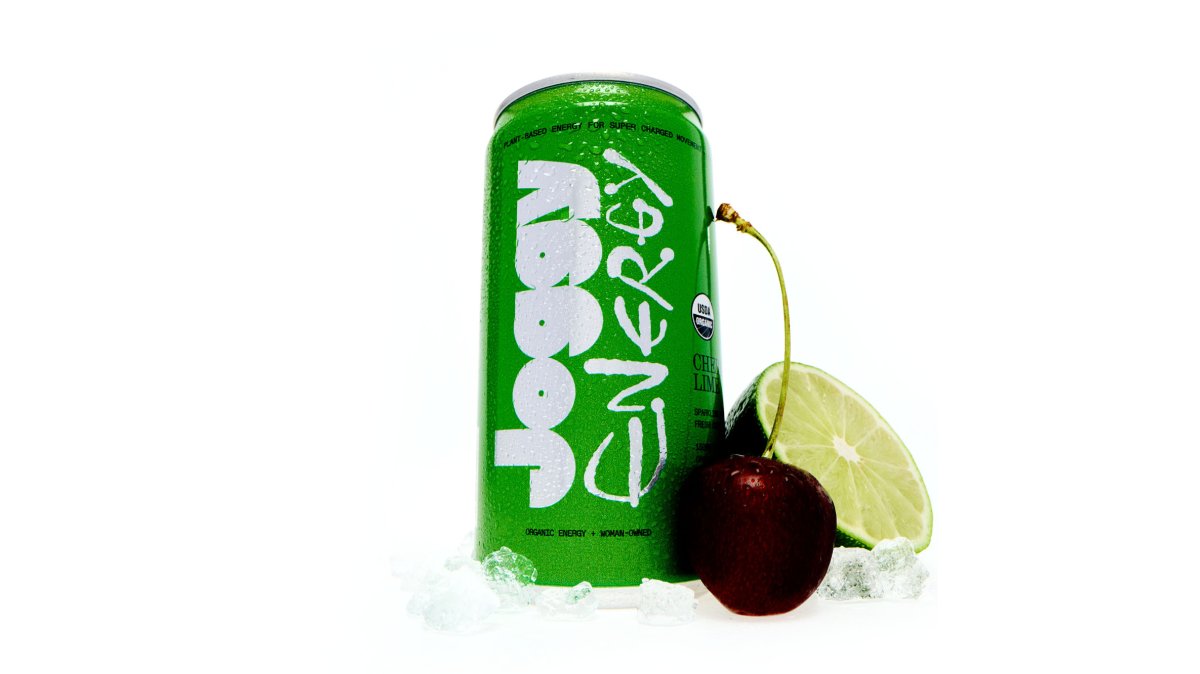
The formula is USDA Organic, carries no added sugar, and uses organic juice for flavor. Each can holds 150mg of naturally occurring caffeine from AmaTea Max, plus L-Theanine, the pairing that smooths the edge off a stimulant hit. It is vegan, non-GMO, and gluten-free, which covers most dietary exclusions buyers ask about.

On taste, it drinks like juice rather than syrup. That is the differentiator. Most "clean" cans taste like medicine with a fruit sticker on the front.
Cherry Lime, Pineapple Crush and the Variety Pack
Cherry Lime leads with tart cherry and a lime finish that stays crisp rather than candy-sweet. Pineapple Crush is the brighter of the two, tropical without tipping into artificial territory. The Variety Pack at $39.99 includes equal quantities of Cherry Lime, Solar Mango, and Pineapple Crush, which is the sensible way to find your flavor before committing to a full case.

Pros, Cons and Cost per Serving
What works: a stated 150mg dose, organic certification, zero added sugar, and a flavor profile that does not require willpower. The brand also carries 70 verified 5-star reviews, a modest but real signal for a smaller label.
What does not: availability. Joggy sells direct through its own site, so you cannot grab a can at a checkout counter yet. Full cases of Cherry Lime and Pineapple Crush run $74.99, and at 12 cans that works out to roughly $6.25 per serving. That is a premium over mass-market cans, and it is the honest tradeoff for organic ingredients and a transparent formula.
Best-Tasting Healthy Energy Drinks: Flavor and Aftertaste
Flavor is where healthy energy drinks usually lose. Bitterness comes from caffeine itself, and the aftertaste often comes from low-calorie sweeteners that linger on the palate. A can that tastes good on sip one and strange on sip ten will sit in your fridge.
The fix is juice. Organic juice carries real fruit sugar in small amounts and rounds off the bitter edge that isolated caffeine leaves behind. Joggy's three flavors, Cherry Lime, Pineapple Crush, and Solar Mango, all lean on that approach, and the result reads as refreshing rather than medicinal.
Temperature matters more than most people expect. Serve cold, ideally over ice, and the bitterness recedes further. If you are coming from a heavily sweetened can, give yourself three servings before you judge. Your palate recalibrates faster than you think.
Jitters, Crash and Daily-Use Tradeoffs
Jitters and crashes are dose and delivery problems, not moral failings. A 300mg synthetic hit arrives fast and leaves fast, which is why the rebound feels like a wall. A moderate 150mg dose paired with L-Theanine tends to arrive smoother and taper more gently, though the research here is about general patterns, not guarantees for every person.
The health picture deserves honesty. Harvard Health's review of energy drinks reports that research has shown energy drinks can disrupt normal heart function, and a PubMed Central review led by A. A. Alsunni notes that several studies found increases in heart rate and arterial blood pressure after consumption. A 2026 narrative review summarized by Taylor & Francis also points to improvements in reaction time, vigilance, and attention. Both things can be true: useful alertness and real cardiovascular caution.
Daily use raises the stakes in ways a single-can review rarely addresses. Three tradeoffs matter most:
- Sleep debt. Caffeine's half-life means an afternoon can can still be measurably in your system at bedtime. Most practitioners find that protecting the eight hours before sleep matters more than the exact cutoff time, so treat any afternoon serving as a sleep decision, not just an energy decision.
- Tolerance. Regular caffeine intake prompts the body to upregulate adenosine receptors, which is why the same can feels weaker after a few weeks. Rotating sources and taking rest days keeps your baseline honest and your dose effective.
- Reliance. The line between a useful tool and a dependency is usually crossed quietly. A common pattern is one can becoming two, then becoming the only way to start the morning. If skipping a day produces a headache or a flat mood, that is a signal to reset, not to add another can.
A practical daily-use frame: keep total intake under 400mg, favor moderate single servings over stacked ones, pair each can with water, and skip the can on rest days so your baseline stays honest. If you take medication or have a heart condition, get medical advice first.
Frequently Asked Questions
Are natural energy drinks healthier than traditional energy drinks?
It depends on the formula. A natural energy drink typically uses plant-derived caffeine and avoids added sugar, while many traditional cans rely on synthetic caffeine and 27g or more of sugar. The global energy drinks market was valued at $85.3 billion in 2025 (Grand View Research), and clean-label options are growing fast. Still, 'natural' is not automatically safe: Harvard Health reports energy drinks can disrupt normal heart function, and a 2015 review led by A. A. Alsunni found rises in heart rate and blood pressure after consumption. Check caffeine dose and total ingredients, not just the label.
How much caffeine is in natural energy drinks?
Most natural energy drinks land between 80mg and 150mg per can. Joggy delivers 150mg of naturally occurring organic caffeine per serving from AmaTea Max guayusa extract, which sits roughly in line with a strong cup of coffee. For context, a 2021 U.S. product-composition check found 64% of energy drinks contained B vitamins, but caffeine content varied widely (Gitnux). If you are sensitive, start with half a can and check the milligrams on the label before daily use.
Can natural energy drinks cause jitters or a crash?
They can if the caffeine dose is high or the drink is loaded with sugar. Jitters usually come from fast caffeine spikes, and a crash follows a sugar rush. Joggy pairs 150mg guayusa caffeine with L-Theanine, which is designed to smooth the curve, and adds no sugar. A 2026 narrative review led by J. D. Matondo found systematic reviews link energy drinks to improved reaction time and attention, but individual sensitivity still matters. Track your dose and avoid drinking one late in the day.
What ingredients should I look for in a natural energy drink?
Start with the caffeine source: guayusa, green tea or coffee bean instead of synthetic caffeine. Then check for added sugar (aim for zero), artificial sweeteners you react to, and a short ingredient list you recognize. Joggy uses organic juice, is USDA Organic, vegan, non-GMO and gluten-free, with no added sugar. A 2026 Glanbia Nutrition trends report flags natural energy ingredients and sustained energy as key 2026 priorities. Look for third-party testing or clear label transparency before trusting any 'clean' claim.
Which natural energy drink tastes the best?
Taste is personal, but juice-based formulas tend to beat the medicinal aftertaste of synthetic cans. Joggy's Cherry Lime and Pineapple Crush are built on organic juice and described as tasting like juice rather than candy. The Variety Pack ($39.99) includes Cherry Lime, Solar Mango and Pineapple Crush so you can test all three before committing to a full case at $74.99. If you dislike bitterness, start with the fruit-forward flavors and serve cold. Read the label for sweetener type, since that drives aftertaste more than the caffeine source.